In a world where traffic jams and air pollution seem to have a permanent residency, eco urban transport is the superhero we didn’t know we needed. Imagine gliding through the city on a sleek electric scooter or hopping onto a solar-powered bus, all while feeling like you’re part of a futuristic movie. It’s not just about getting from point A to point B; it’s about doing it in style while saving the planet—one ride at a time.
Cities are evolving, and so should the way people move within them. Eco urban transport offers a refreshing alternative to the gas-guzzling, congestion-inducing vehicles of yesteryear. With options like bike-sharing programs and electric public transit, urban dwellers can embrace a greener lifestyle without sacrificing convenience. So buckle up—or rather, hop on—and discover how eco-friendly transport is transforming urban life into something truly remarkable.
Overview of Eco Urban Transport
Eco urban transport encompasses sustainable transportation solutions designed to reduce carbon footprints and enhance urban living. Various modes of transport, including electric scooters, solar-powered buses, and bike-sharing systems, demonstrate the diverse options available.
Urban areas increasingly adopt electric scooters for short commutes. These scooters provide a convenient way to navigate congested streets while minimizing air pollution. Similarly, solar-powered buses contribute to reducing greenhouse gas emissions, making public transit greener.
Bike-sharing programs have gained popularity as an effective, eco-friendly option. Cities implement these initiatives to encourage residents to opt for cycling over personal vehicles. Reduced traffic congestion results in improved air quality and healthier lifestyles.
Electric public transit systems leverage technology to enhance efficiency. With quieter operations, these systems minimize noise pollution. Many cities invest in such infrastructure, reflecting a commitment to sustainable urban development.
Data indicates that the adoption of eco urban transport leads to significant reductions in emissions. Studies show that cities that implement these systems witness up to a 25% decline in transport-related emissions within five years. Enhanced accessibility and affordability further attract individuals to choose green transportation options.
As urban centers evolve, integrating eco-friendly solutions into transportation policies becomes essential. Efforts must focus on creating seamless connections between different modes of transport. This holistic approach ensures sustainable urban mobility and fosters a cleaner environment for future generations.
Importance of Eco Urban Transport
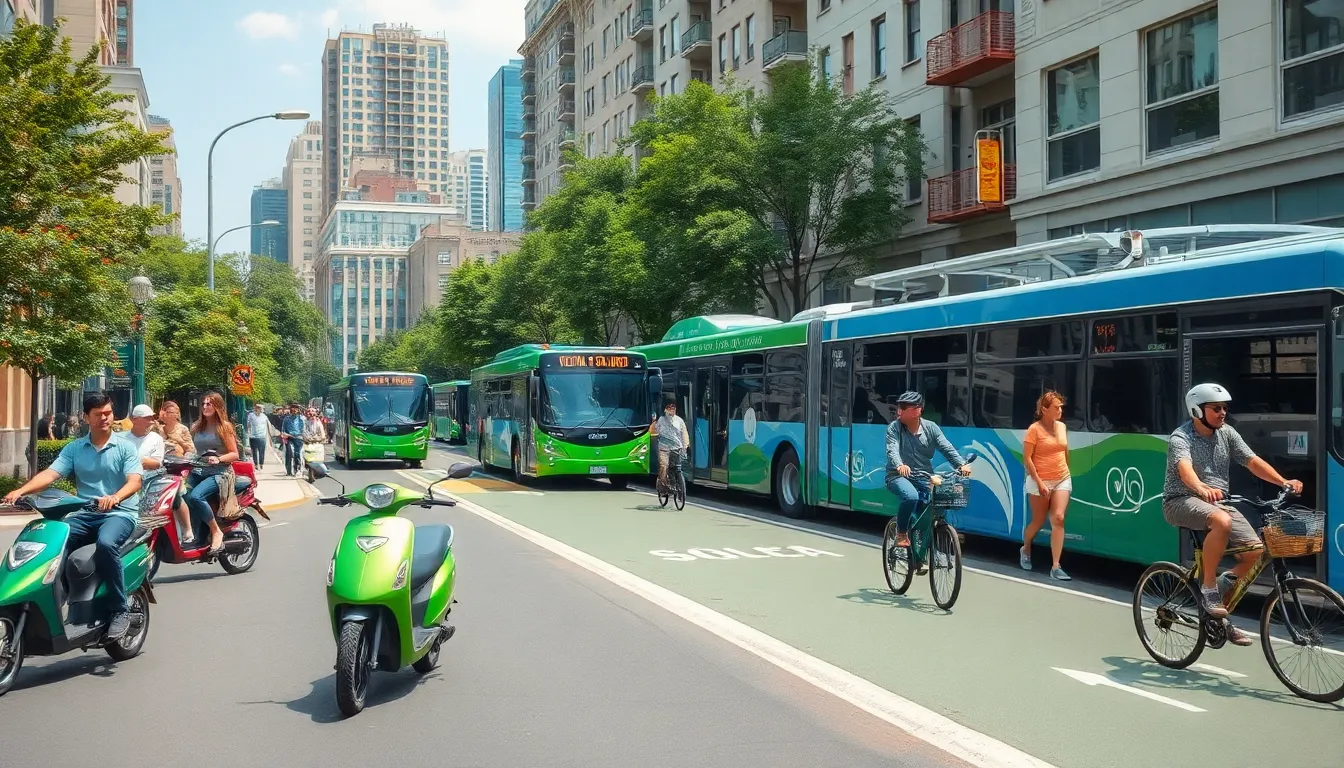
Eco urban transport plays a crucial role in enhancing sustainable city living. Incorporating these systems leads to significant positive impacts on the environment and economy.
Environmental Benefits
Utilizing eco-friendly transportation methods directly reduces greenhouse gas emissions. Electric scooters, for instance, emit no exhaust fumes, which helps improve urban air quality. Solar-powered buses contribute similarly by relying on renewable energy sources. Studies show cities adopting these technologies may experience up to a 25% decline in transport-related emissions within five years. Cyclists benefit from safer, cleaner routes, promoting healthier lifestyles. With fewer traditional vehicles on the road, noise pollution significantly decreases, creating more peaceful urban spaces. In summary, eco urban transport fosters environmental sustainability while enhancing overall urban livability.
Economic Advantages
Implementing eco urban transport systems generates various economic benefits for cities. Savings from reduced fuel costs often translate into lower operational expenses for public transit. Job creation within the green transport sector emerges, as demand for electric scooters and solar buses increases. Additionally, improved air quality can enhance public health, leading to decreased healthcare costs for communities. Cities may also attract eco-conscious businesses and residents, boosting local economies. Investments in bike-sharing programs can stimulate tourism, as visitors experience eco-friendly transportation options. Overall, these advantages illustrate how eco urban transport supports economic development while promoting sustainability.
Types of Eco Urban Transport Solutions
Eco urban transport solutions encompass various innovations that prioritize sustainability and reduce environmental impact in urban areas. These systems aim to enhance both mobility and quality of life for residents.
Public Transit Innovations
Electric buses represent a significant advancement in public transit innovation. Their use decreases greenhouse gas emissions, contributing to improved air quality. Technology integration enables real-time tracking, ensuring that passengers enjoy efficient and timely service. Cities utilizing electric buses can decrease transport-related emissions by up to 25% in five years. Additionally, solar-powered trams provide another eco-friendly choice, harnessing renewable energy to reduce reliance on fossil fuels. Smart traffic management systems also optimize bus routes, further increasing the efficiency of public transport and minimizing delays.
Sustainable Biking and Walking Infrastructure
Bike-sharing programs flourish in urban environments, offering accessible and cost-effective transport options. Communities benefit as these initiatives encourage cycling, leading to reduced road congestion and lower carbon footprints. Infrastructure investments in dedicated bike lanes promote safer cycling environments, increasing rider confidence and participation. Cities that prioritize pedestrian-friendly pathways not only enhance walkability but also cultivate healthier lifestyles. Parks and green spaces integrated into urban design encourage walking, contributing to improved mental well-being. Overall, prioritizing biking and walking infrastructure fosters a culture of sustainability within urban settings.
Challenges in Implementing Eco Urban Transport
Funding and investment gaps hinder the expansion of eco urban transport solutions. Insufficient financial resources often stall necessary infrastructure improvements. Many cities struggle to secure adequate budgets for electric buses or bike-sharing programs. Public-private partnerships present a potential avenue for generating capital but face challenges in alignment of interests. Cities can benefit from competitive funding opportunities at the federal and state levels. However, these funds may come with stringent stipulations, limiting local flexibility in project decisions.
Urban planning issues complicate efforts to integrate eco urban transport into existing infrastructures. Zoning regulations frequently conflict with the implementation of bike lanes or dedicated bus routes. Limited space in densely populated areas poses additional difficulties for effective transportation integration. Local authorities may lack the expertise needed to create comprehensive plans that prioritize eco-friendly transport. Engaging communities in the planning process fosters more inclusive solutions. Still, data-driven assessments must accompany these efforts to optimize design and functionality.
Case Studies of Successful Eco Urban Transport
Cities globally showcase successful eco urban transport solutions, demonstrating benefits for urban living and the environment. Two notable examples illustrate different aspects of implementation and outcomes.
City A: Implementation and Outcomes
City A adopted an electric bus fleet, focusing on maximizing operational efficiency and reducing emissions. The transition from fossil fuels to electric buses led to a marked decrease in greenhouse gas emissions, with reports indicating a reduction of up to 30% within three years. Residents now enjoy quieter roadways and improved air quality. Additionally, the installation of charging stations facilitated seamless integration with existing public transport networks. By prioritizing sustainable transport, City A has not only enhanced mobility but also attracted investments in green initiatives.
City B: Lessons Learned
City B encountered challenges while establishing a bike-sharing program, experiencing funding gaps that initially stalled expansion. Community engagement played a vital role in overcoming these hurdles. Public feedback prompted adjustments in program offerings, making the system more user-friendly. Local authorities learned the importance of incorporating feedback loops to refine services continually. The integration of smart traffic management also optimized bike routes, improving safety and accessibility. Overall, City B’s experience highlights the necessity of adaptability and community involvement in developing sustainable transportation solutions.
The shift towards eco urban transport represents a pivotal change in how cities approach mobility. By embracing innovative solutions like electric scooters and solar-powered buses, urban areas can significantly reduce their carbon footprints while enhancing the quality of life for residents.
Challenges remain in funding and infrastructure integration, but successful case studies demonstrate that with community involvement and strategic planning, these obstacles can be overcome. As cities continue to evolve, prioritizing sustainable transport options will not only address pressing environmental issues but also foster economic growth and healthier lifestyles.
The future of urban mobility lies in these eco-friendly solutions, paving the way for cleaner and more connected cities.